Home›Companions›Generate›NSFW AI Art With No Style to Choose
NSFW AI Art With No Style to Choose
Type nsfw ai art into most generators and you land on a style list: anime, painted, 3D render, photoreal. This page has no style list. Every Muse in the strip above is a photoreal character whose look is pinned on the generation side, so a photograph is the only thing a request can return. You choose her, describe the scene in your own words, and one file comes back in her chat. Asking is free; opening it costs Sparks.
Nothing in the request chooses a style
The box is one free-text field, 5 to 1,500 characters, and the request leaving this page carries three things: which Muse you picked, whether you asked for a photo or a video, and what you typed. No style field, no model list, no resolution, no aspect ratio, no preset. How the picture looks as an image was settled before you arrived.
Which means drawn work is not throttled here, it is absent. Type anime style or cel shading and the request goes through; what comes back is a photograph, because that is all this catalogue produces. Hentai, comics and painted output sit in the same place.
If a drawn style is what you came for, this is the wrong page, and better to learn it in this paragraph than at the first file. The rest of this covers what photoreal-only buys and where it costs you.
What happens to masterpiece, 4k and a negative prompt
People arriving from tag-driven art tools write a comma string: quality words, a resolution, a render engine, an artist. All of it reaches the generator as ordinary words in a sentence, because nothing here reads any of them as switches. Masterpiece is not a quality level, and 4k does not set the file.
Negative prompts have no field and no syntax. Writing no shoes is a clause about shoes, and it reads as well or as badly as any other clause. When something unwanted keeps turning up, describing what should be there works better than listing what should not.
So the sentence is prose, not a command line. Twenty concrete words about place, hour, clothing and what she is doing beat sixty words of tags, and when a short request misses you can see which clause did it.
A photograph has to be physically possible
A drawing carries a pose no body makes and a room with no floor plan; the style absorbs it. A photoreal frame cannot. Impossible geometry — two viewpoints at once, a position needing a third arm, a mirror that sees around a corner — comes back as something plausible nearby instead.
So brief it the way you would brief a photographer. One place, one hour, one light source, one position, one thing happening. Low sun through a half-closed blind, her on the edge of the bath with a towel across her knees: a frame someone could have stood in front of.
The same logic pays you back on surfaces. Photoreal output has somewhere to put damp hair, cotton that has been slept in, the flat unkind light of a ceiling fixture. One surface and one light source move the frame further than another clause about the pose.
A near miss looks worse in a photograph than in a drawing
Style is forgiving. A drawn figure that is slightly wrong reads as a choice and the eye lets it through. A photoreal one reads as broken: a hand with the wrong count of knuckles, a reflection that disagrees with the room, a strap going nowhere. The same error rate feels higher.
How the file arrives decides what you can check for free. It lands in the chat blurred, and the blur is scaled to a tenth of the delivered width, which is heavy: the framing and the overall light read through it, the pose does not, and a hand certainly does not.
Whether that is fair depends on where your requests go wrong. Composition is the usual culprit, and judging it costs nothing. Detail is the part you buy, and the part the blur kept from you, so when it comes back wrong there is no retry on a finished result, only a fresh request.
Likeness is closed off by how this is built, not by a refusal
There is no upload anywhere on this platform. No image-to-image, no face swap, no reference slot. That is not a feature waiting to ship; a photograph has no route in. The only visual input is which Muse you picked, and her appearance is held on her character.
A typed name is not an input here, so nothing has to refuse one, and nothing does. The box does screen the description before a request is built: wording that sexualises anyone under 18 is refused, and so is wording that asks for a celebrity, a look-alike or a photo of someone you know. Invisible and control characters are stripped, chat role markers thrown out.
With drawn output, likeness is a soft argument about resemblance. With photoreal output it is not, which is why the line sits in how the thing is built rather than in a policy paragraph. Adjectives about her face change nothing; when the look is wrong, pick another Muse.
What opening costs, where the free asks stop, and how the file lands
Generating costs nothing, failed attempts included, with no daily quota. The charge is on opening: 20 Sparks for a photo, 50 for a video. A new account starts with 50 credits — two photos or one video. Premium includes no unlocks and no discount on them.
What the free asks have is a ceiling: 50 results outstanding at once, photos and clips sharing one pool, and past it the next request is refused. A finished file you have not opened holds a slot, and so does a request still being made. That wall, not a bill, is what heavy use meets.
A placeholder reply appears in the chat almost at once and fills in when the file is ready: minutes for a photo, longer for a clip. She does not comment on it, because the chat model never sees the request. Once opened, a file stays in the thread indefinitely.
12 Muses you can ask right now
Questions
Is there a style selector on this page?
No. There is no style field, model list, resolution, aspect ratio or preset. You pick a Muse, write 5 to 1,500 characters, and one photoreal file comes back.
Why is every result photoreal?
Because the style belongs to the Muse rather than to your request. Each one is a photoreal character with her look pinned on the generation side, so there is no other kind of output to land on.
Do quality tags like masterpiece or 4k do anything?
No. They arrive as plain words in your sentence. Nothing here reads them as settings, so they use up room in the description without changing the file.
Can I write a negative prompt?
There is no negative prompt field and no syntax for one. Phrases about what you do not want read as ordinary clauses, so describe what should be in the frame instead.
How much can I judge while the file is still blurred?
The framing and the overall light. The blur is scaled to a tenth of the delivered width, so the pose and the fine detail stay hidden until you spend the 20 or 50 Sparks.
Is there a limit on how many free requests I can have running?
Yes. 50 results can be outstanding at once, photos and clips in one pool, counting both finished files you have not opened and requests still being made. Past that, the next one is refused until you open something.
If I never open a result, have I spent anything?
No. Generating is free however often it fails, and nothing leaves your balance until you open a finished file. Unopened ones do count against the ceiling, though.
Does naming a real person in the description do anything?
No. Her look is fixed to her character and no photograph can enter the system, so who comes back is unchanged. Wording that asks for a celebrity or a look-alike does not even get sent: the box refuses it.
Other things to ask for

 Amity
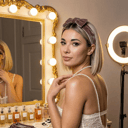 Alessia
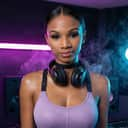 Celia
 Minji
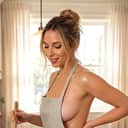 Emma
 Camila
 Olivia
 Renata
 Dominique
 Paloma
 Maren
 Harper